Wednesday, August 26, 2020

Thursday, June 18, 2020
Impact of COVID-19 on Hearing Aids Market
Global Hearing Aids Market: Snapshot
In the last few years, technological developments in the healthcare sector has helped in increasing the life span of people by providing them better and effective health care. Moreover, large number of geriatric population in developed countries who are susceptible to have hearing problem due to old age has also increased the demand for this market. Nowadays, government in developing economies is also providing better and enhanced healthcare to its people. Thus, with the growing lifespan of the people is expected to drive the demand for this market. Moreover, high disposable income of consumers in developed economies and use of advanced technology in the healthcare sector is likely to benefit the hearing aids market.
According to the report published by Transparency Market Research, the global hearing aids market is antcipated to rise at 4.5% CAGR during the forecast tenure from 2016 to 2024. By rising at this rate, the valuation of the market is expected to reach US$7 bn by the end of 2026. In 2015, the valuation of the market was US$4.7 bn.
Request Sample Of Report - https://www.transparencymarketresearch.com/sample/sample.php?flag=S&rep_id=4952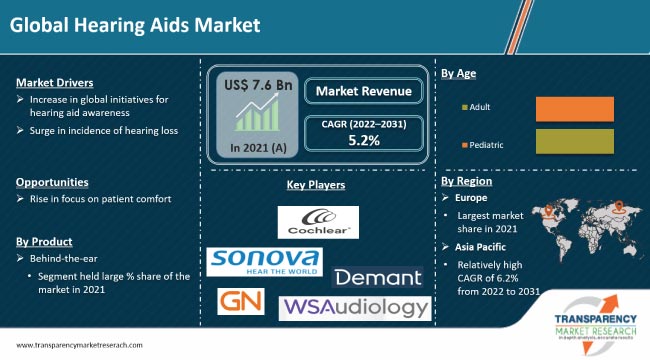
Large Numbers of Adults Having Hearing Problem Lead Adult Hearing Aids Dominate Market
The global hearing aids market is classified on the basis of end-user, product type, and region. In terms of end-user, the market is bifurcated into adult and pediatric. Out of these two, the adult hearing aids dominated the market in 2015 and held 95% market share in the global market. Over the next few years, this segment is expected to lead the market across the globe. However, pediatric hearing aids segment is also likely to gain traction as the hearing problem is increasing among younger population.
Based on product type, the global market is bifurcated into hearing aids and bone anchored hearing aids (BAHA). The hearing aids segment is further divided into receiver in the ear (RITE), behind the ear (BTE), canal hearing aids (ITC), (IIC), and (CIC), and in the ear (ITE).
Request the Coronavirus Impact Analysis on this Markets - https://www.transparencymarketresearch.com/sample/sample.php?flag=covid19&rep_id=4952
Europe to Lead Global Market Due To Consistent Updation of Medical Technology
On regional front, Europe leads the global hearing aids market as large number of customer are capable and can afford hearing aids due to their high disposable income. Moreover, constant support and updation of medical technology has also grown the demand for hearing aids in this region. North America is also considered one of the leading players for this market, as large numbers of players are present in the region. On the other hand, Asia Pacific where several emerging economies are making efforts and are expected to drive the hearing aids market a t the global level.
Buy _ Research Report Now - https://www.transparencymarketresearch.com/checkout.php?rep_id=4952<ype=S
Top leading players in the global hearing aids market held dominated the market. In 2015, the top six players held 98% share in the global market. In addition, these players are using similar business development strategies to expand their business and strengthen their position in the market. Leading players are also investing in research and development activities to offer better product to their customers. GN ReSound, Widex A/S, Siemens Healthcare, Starkey, the William Demant Holding Group, and Sonova Holding AG are the leading players in the market.
More Trending Reports by Transparency Market Research – https://www.biospace.com/article/global-3d-printing-medical-devices-market-to-expand-with-growing-need-for-operational-excellence-in-medical-research/
Friday, May 15, 2020
Global Cardiopulmonary Stress Testing Systems Market: Emergence Of New Players To Intensify Competitive Rivalry, Notes Tmr
Global Cardiopulmonary Stress Testing Systems Market: Snapshot
Technological innovations remains the focus of established players in the intensely competitive cardiopulmonary stress testing systems market. The market is also facing the emergence of emerging players at an exponential rate that are vying to develop high-value, cost-effective ancillary devices for cardiopulmonary stress testing systems.
Among the several factors driving the global cardiopulmonary stress testing systems market, the significant increase in the adoption of stress testing procedures for early diagnosis of heart diseases is a prominent one. Diagnosis of proper functioning of heart remains the first line of treatment that helps physicians to evaluate the health status of patients that are at risk of cardiovascular diseases.
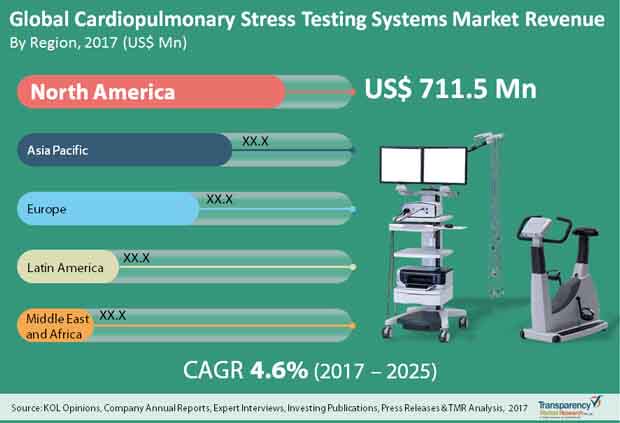
A report by Transparency Market Research (TMR) estimates the global cardiopulmonary stress testing systems market to clock a CAGR of 4.6% for the forecast period from 2017 to 2025. Proliferating at this pace, the market which stood at US$2.08 bn in 2016 will become worth US$3.08 bn by the end of 2025.
Request Sample Of Report – https://www.transparencymarketresearch.com/sample/sample.php?flag=S&rep_id=1530
Product Features and Development of Portable Device Accounts for Dominance of Cardiopulmonary Exercise Testing System
The report studies the global cardiopulmonary stress testing systems market on the basis of product type, end-user, and geography. Based on product type, the global cardiopulmonary stress testing systems market is categorized into cardiopulmonary exercise testing systems, pulse oximeters, stress electrocardiograph, single-photon emission computed tomography, and stress blood pressure monitors. Amongst all, in 2016, the cardiopulmonary exercise testing systems segment led the global cardiopulmonary stress testing systems market vis-à-vis revenue among the various product types. The key reasons for the dominance of the cardiopulmonary exercise testing system is because of a large patient pool with cardiovascular diseases, high average selling price of device, and innovations leading to the development of portable cardiopulmonary exercise testing systems. The cardiopulmonary exercise testing systems segment is likely to continue to dominate this market over the forecast period.
In terms of end-user, the global market for cardiopulmonary stress testing systems is segmented into hospitals, diagnostic centers, ambulatory surgical centers, and specialty clinics/cardiology clinics. Of them, hospitals segment is likely to dominate the global cardiopulmonary stress testing systems market vis-à-vis revenue during the forecast period. The growth of the segment is attributable to factors such as rising preference of physicians as well as patients for the early diagnosis of cardiovascular diseases and extensive research on wireless and portable products. The diagnostic centers segment, on the other hand, is likely to rise at a relatively higher CAGR in terms of value in the global cardiopulmonary stress testing systems market over the forecast period.
Request For Custom Research – https://www.transparencymarketresearch.com/sample/sample.php?flag=CR&rep_id=1530
Asia Pacific to Emerge Lucrative in Upcoming Years
Based on geography, the global cardiopulmonary stress testing systems market has been classified into North America, Asia Pacific, Europe, Latin America, and the Middle East and Africa. Of them, in 2016, North America held the leading share in the global cardiopulmonary stress testing systems market, and is expected to continue dominance during the forecast period 2017-2025. Rising patient population that demand proper care, increasing adoption of early diagnosis practices, rising adoption of newly introduced advanced systems at public health institutes which aid physicians and nurses to monitor patient’s health in real-time have been some of the key factors responsible for the leading share of North America global cardiopulmonary stress testing systems market.
Asia Pacific is estimated to expand at the leading CAGR in terms of value, among other key regions in the global cardiopulmonary stress testing systems market during the forecast period of 2017-2025.
Leading players in the global cardiopulmonary stress testing systems market include Koninklijke Philips N.V., Hill-Rom Holdings Inc., General Electric Company, MGC Diagnostics Corporation, OSI Systems Inc., Masimo, NIHON KOHDEN CORPORATION, COSMED, Halma pla, Schiller AG, and Vyaire Medical Inc. among others.
More Trending Reports by Transparency Market Research – https://www.biospace.com/article/digital-dose-inhalers-market-artificial-intelligence-and-machine-learning-pave-the-way-for-inhaler-manufacturers/
Global Vitreous Tamponades Market: Players Focus To Develop Newer Products To Capture Larger Market Share, Finds Tmr
Global Vitreous Tamponades Market: Snapshot
A highly fragmented global vitreous tamponades market is distinctive in terms of dominance of a select number of players in each region. Keen players in the market have given thrust to research and development to introduce newer products to serve the demand for case-specific products for specialty medical procedures.
The global market for vitreous tamponades is primarily driven by the increasing incidence of retinal detachment, diabetic retinopathy, macular pucker, and other retinal disorders. As per statistics of the International Diabetes Federation, around 300 million diabetes cases were reported in 2010 globally and it is estimated to reach 438 million by 2030. The rising incidence of diabetes that is related to be a major cause of diabetic retinopathy and other retinal disorders is stoking the demand for tamponades to prevent impaired vision and even blindness.
Besides this, the growing geriatric population that is more susceptible to retinal breaks is also a key factor boosting the growth of vitreous tamponades market.
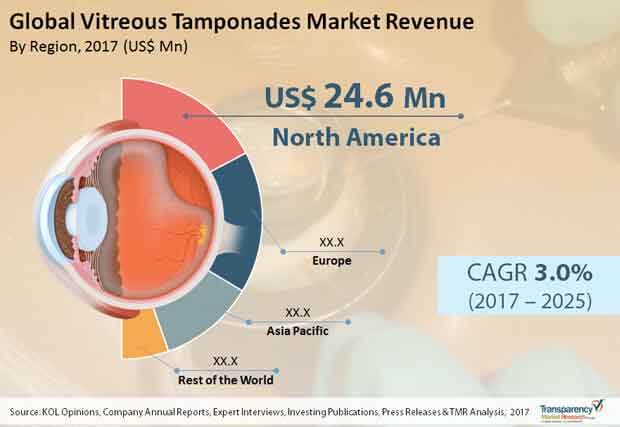
A report by Transparency Market Research (TMR) estimates the global vitreous tamponades market to attract a revenue of US$89.9 mn by the end of 2025 from US$69.3 mn in 2016 at a CAGR of 3.0% for the forecast period between 2017 and 2025.
Request Sample Of Report – https://www.transparencymarketresearch.com/sample/sample.php?flag=S&rep_id=4233
Gaseous Tamponades Gaining Traction due to Ease of Use, Low Cost
The report studies the global vitreous tamponades market on the basis of product type, end-user, and geography. Based on product type, the global vitreous tamponades market is divided into gaseous tamponades and liquid tamponades. Vis-à-vis revenue, of the two, liquid tamponades segment led the global vitreous tamponades market in 2016 accounting for 53.9% market share. The supremacy of the segment is due to the extensive use of liquid tamponades in European and Asian region for the treatment of retinal detachments, giant tears, proliferative diabetic retinopathy, and proliferative vitreoretinopathy. The segment of liquid tamponades has been further sub-segmented into silicone oil and perflurocarbon liquid. Of the two, silicone oil is anticipated to surpass in terms of growth rate during the 2017-2025 forecast period. On the other hand, the perflurocarbons liquid segment is likely to witness constant growth over the 2017-2025 forecast period as they are primarily used for the reattachment of giant retinal tears.
Gaseous tamponades, on the other hand, is expected to display the leading growth rate in the upcoming years. This is mainly because of low risk of emulsification, low cost, and ease of use. SF6, C2F8, and perfluropropane are the most common types of gaseous tamponades used in vitreoretinal surgeries worldwide. These gases offer advantages of being expansive that allows the retina and eyeball to gradually adjust to the occupying volume of the eye for better healing.
Based on end-user, the global vitreous tamponades market has been segmented into hospitals and ophthalmology clinics. Of the two, ophthalmology clinics held the leading share of the market in terms of revenue in 2016.
Request For Custom Research – https://www.transparencymarketresearch.com/sample/sample.php?flag=CR&rep_id=4233
North America Leads Market due to High Incidence of Retinal Detachment
In terms of geography, the global vitreous tamponades market has been segmented into four major regions: North America, Asia Pacific, Europe, and Rest of the World. Powered by the U.S., North America held supremacy in terms of revenue over other key regions in the overall market in 2016. In the U.S., retinal detachment accounts as a major cause for morbidity with an incidence of 10.1 to 17.9 per 100,000 individuals.
Asia Pacific, on the other hand, is anticipated to emerge as a promising region and display increased market share over the forecast period from 2017 to 2025.
Leading players in the global vitreous tamponades market include Novartis AG, Valeant Pharmaceuticals, Dutch Ophthalmic Research Center B.V., AL. CHI. MI.A srl, Fluron GmbH, and Carl Zeiss Meditech AG
More Trending Reports by Transparency Market Research – https://www.biospace.com/article/copd-drug-delivery-devices-market-companies-launch-new-products-to-stay-competitive-in-global-market/
Blood Cell Analyzer Market Projected To Expand At 6.2% Cagr Owing To Advancing Healthcare Scenarios
Global Blood Cell Analyzer Market: Snapshot
World over, blood cell analyzers have gained prominence for the biochemical analysis of blood components among hospitals, diagnostic centers, pharmaceutical companies in patient care and laboratory settings. They are widely used in detecting common physiological indications for various blood-related disorders and in monitoring the overall health of patients in hospital settings. The rising application of these hematology analyzers in research settings, such as for drug development, is a prominent factor boosting the overall market. The advent of technologically advanced semi-automated and fully-automated cell analyzers with improved precision and accuracy is a key development opening up promising applications of these instruments. The striking precision that automated blood cell counters make differential analysis of the blood components, such as absolute leukocyte count, has boosted their application in patient settings.
The global blood cell analyzer market is estimated be worth US$1,364.2 Mn by 2017 end and is forecast to reach a valuation of US$1,844.9 Mn by 2022 end. The market is estimated to register a CAGR of 6.2% during the assessment period of 2017–2022.

Request Sample Of Report – https://www.transparencymarketresearch.com/sample/sample.php?flag=S&rep_id=33728
Substantial Demand for Automation in Blood Cell Analyzers to Account for Dominance of Fully Automated Biochemistry
The two main product types of blood cell analyzers are semi-automated biochemistry analyzers and fully automated biochemistry analyzers. Of the two, semi-automated biochemistry segment holds the leading share currently and is expected to retain its dominance throughout the forecast timeline. The fully automated biochemistry analyzer market is expected to be worth US$1,071.1 by 2017 end, representing the major share of 78.5%. The segment is forecast to reach US$1,476.2 Mn by 2022, accounting for the leading share of 80.0% in the market. The segment is projected to rise at a CAGR of 6.6%, growing at US$81 Mn annually over the assessment period. This represents the leading growth in absolute terms. The growth of this segment is expected to be fueled by the burgeoning demand for error-free automated analyzers for rapid biochemical analysis of blood in various parts of the world.
North America Predicted to be Most Attractive Regional Market
The various regional markets for blood cell analyzers are North America, the Middle East and Africa, Asia Pacific excluding Japan, Japan, Europe, and Latin America. Of these, currently North America is the leading market and is anticipated to retain its dominance throughout the forecast period. The North America blood cell analyzer market is projected to rise from a valuation of US$516.9 Mn in 2017 to reach a worth of US$717.5 Mn by the end of 2022. The regional market is projected to rise at a compound annual growth rate of 6.8% during 2017–2022. The vast adoption of automation in hematology in various clinical settings and substantial advancements in physical technologies used for blood cell counters are key factors expected to accentuate the market over the forecast period.
Request For Custom Research – https://www.transparencymarketresearch.com/sample/sample.php?flag=CR&rep_id=33728
Asia Pacific excluding Japan (APEJ) to rise at Prominent Pace
Asia Pacific is one of the most attractive markets for blood cell analyzers witnessing a burgeoning demand for clinical diagnostics market and drug development in several of its emerging and developed economies. The demand is driven by the rising incidence of chronic diseases, constant advancements in diagnostics instruments, and growing awareness of populations of blood related disorders. Rising at a CAGR of 6.7% from 2017 to 2022, the regional market is forecast to reach US$295.5 Mn by 2022 end.
More Trending Reports by Transparency Market Research – https://www.biospace.com/article/viscosupplementation-market-knee-osteoarthritis-to-be-promising-segment/
Guidewires Market To Reach Us$2.7 Bn By 2025, High-Performance Commercial Guidewires To Combine Mechanical Characteristics
Global Guidewires Market: Snapshot
In order to up their sales and revenues, savvy companies in the global guidewires market are expending time and money on research and development of better products having sophisticated features to cater to various medical procedures. The market is being currently driven by the rapid growth in the interventional procedures, growing per capita spends on healthcare, and, of course, constant product development by players.
Proving detrimental to the global guidewires market, on the downside, is their high cost owing to significant time and money expended in research and development, and also because of their non-reusable nature.
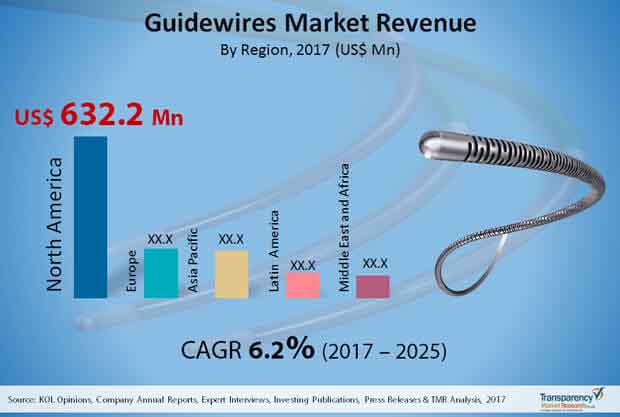
A report by Transparency Market Research predicts the global guidewires market to clock a steady CAGR of 6.2% during the period between 2017 and 2025 to become worth US$2.7 bn by 2025-end from US$1.6 bn in 2016.
Request Sample Of Report – https://www.transparencymarketresearch.com/sample/sample.php?flag=S&rep_id=6484
Rising Cardiovascular Diseases Makes Coronary Guidewires Leading Product Segment
Product-wise, the main segments of the global guidewires market are coronary guidewires, peripheral guidewires, neurovascular guidewires, urology guidewires, radiology guidewires, gastroenterology guidewires, and other guidewires (otolaryngology and oncology). Among them, the segment of coronary guidewires account for maximum share in the market because of the alarming increase in instances of cardiovascular diseases, worldwide. Their demand is particularly high in developed countries where the interventional procedures such as percutaneous transluminal coronary angioplasty (PTCA) and percutaneous transluminal angioplasty (PTA) is comparatively higher. Besides, unveiling of better products from time to time is also boosting their uptake in the market.
The peripheral guidewires form the second-most lucrative product segment because of the rising prevalence of peripheral artery diseases (PAD) resulting from changing lifestyles leading to high blood pressure, high cholesterol, and diabetes. Vis-à-vis growth rate, the urology guidewires will likely register a relatively higher CAGR on the back of new product launches every now and then, rising adoption of guidewires in interventional urology procedures, and growing patient pool for minimally invasive procedures.
High Occurrence of Lifestyle-related Diseases Catapults North America Market to Fore
From a geographical perspective, North America currently holds a dominant share in the global guidewires market. The increasing instances of lifestyle-related diseases, increasing adoption of more sophisticated guidewires, soaring popularity of minimally invasive interventional procedures, and presence of numerous key players in the region have served to fillip the market. The region is expected to retain its dominant position in the near future too by rising at a CAGR of 5.8% in the forecast period.
Europe trails North America, in terms of size, in the global guidewires market. The market in the region has been boosted primarily by a raft of product launches on account of the foray of foreign multinational players, favorable government policies, and a rising geriatric population. By registering a CAGR of 6.0% from 2017 to 2025, the Europe market is expected to attain a value of US$662.1 by 2025.
Request For Custom Research – https://www.transparencymarketresearch.com/sample/sample.php?flag=CR&rep_id=6484
In terms of growth rate, however, Asia Pacific is expected to outshine all other regions in the global guidewires market because of the increasing incidence of cardiovascular diseases, increasing healthcare expenditure in developing nations, and rising demand for affordable minimally invasive interventional procedures. Also majorly fuelling the market in the region is the rising number of local manufacturers of guidewires providing innovative products at lower costs. The region is expected to clock a CAGR of 7.0% from 2017 to 2025.
Abbott, Terumo Medical Corporation, Integer Holdings Corporation, ASAHI INTECC CO., LTD., Olympus Corporation, Stryker, Cardinal Health, Inc., CONMED Corporation, Cook, Merit Medical Systems, Inc., Boston Scientific Corporation, and Medtronic are to name a few key players in the global guidewires market.
More Trending Reports by Transparency Market Research – https://www.biospace.com/article/orthopedic-implants-market-rise-in-adoption-of-technologically-advanced-products-to-treat-musculoskeletal-disorders-to-drive-the-global-market/
Magnetic Resonance Imaging Market Finds A Growth Vibration With Waves Of Lung Imaging
Magnetic Resonance Imaging Market – Snapshot
Inventive technologies and cutting-edge research have led to the development of several innovative magnetic resonance imaging equipment, helping patients live healthier and longer lives. Magnetic resonance imaging or MRI is an advanced diagnostic technology for obtaining information from the interior of the body. Magnetic resonance imaging is also used in the industry for additional technical purposes. Main advantage of magnetic resonance imaging is that it can create 3D images of the object or patient under study without hurting the patient in any way and without using any ionizing radiation.
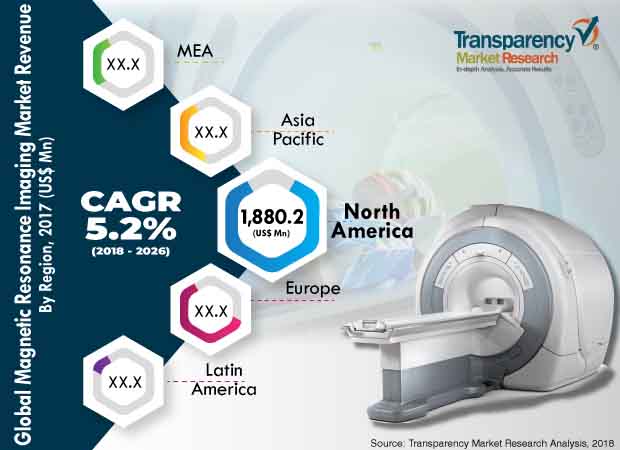
The global magnetic resonance imaging market was valued at US$ 5,900 Mn in 2017 and is projected to expand at a CAGR of 5.2% from 2018 to 2026. There has been a substantial rise in incidence of disorders related with spine, neurology, orthopedic, cardiovascular, head and neck, and abdominal and prostate that has increased the demand for magnetic resonance imaging equipment across the world. According to the World Health Organization (WHO), cardiovascular diseases account for approximately 9.4 million deaths globally each year. The number is slated to increase to more than 23 million by 2030. Upsurge in geriatric population is likely to boost the demand for health care products and services as this segment of population is more prone to diseases, such as, orthopedic (osteoporosis), cardiovascular diseases, etc. Early identification of these disorders is crucial for decision making and ensuring proper treatment. These diseases can be accurately diagnosed with the use of imaging equipment, such as, magnetic resonance imaging (MRI), etc. Hence, rise in aging population is expected to drive the growth of the global magnetic resonance imaging market in the near future.
Request Sample Of Report – https://www.transparencymarketresearch.com/sample/sample.php?flag=S&rep_id=56346
Pressure on government to explore avenues to improve health care facilities for geriatric population while reducing the financial burden is on the rise. Development of health care infrastructure in emerging economies, paired with rise in awareness about available treatment options for spine, neurology, orthopedic, cardiovascular, head and neck, and abdominal and prostate health issues has led to rapid adoption of latest magnetic resonance imaging equipment in regions, such as, Asia Pacific, the Middle East, Latin America, and emerging African countries. Increased efforts of government and health care organizations in such countries toward prevention and efficient treatment of patients has boosted the adoption of magnetic resonance imaging equipment. However, high price of MRI scanners is a major restraining factor of the growth of the market in emerging countries. In these regions, complementary systems, such as, ultrasound are installed as an alternative to magnetic resonance imaging equipment. Moreover, even after procuring costly high resolution closed system MRI equipment, they could not be used as a large number of patients suffer from claustrophobia and have reservations against these equipment. These factors have resulted in limited adoption of premium devices, such as, very high field MRI (4.0t – 5.0t) and ultra-high field MRI (6.0t and above), thereby leading to ordinary growth of the market. However, technological advancements have prompted the development of high resolution open MRI equipment. These devices are likely to be widely accepted in the near future due to better patient compliance and development in the skills of caregivers.
The global magnetic resonance imaging market has been analyzed on the basis of application, design, device type, end-user, and geography. In terms of application, the spine segment held major market share in 2017 and is projected to remain dominant during the forecast period. In terms of device type, the high-field MRI (1.5T – 3.0T) segment is estimated to dominate the magnetic resonance imaging market globally during the forecast timeline.
Request For Custom Research – https://www.transparencymarketresearch.com/sample/sample.php?flag=CR&rep_id=56346
Geographically, North America dominated the global magnetic resonance imaging market in 2017. Technological advancements, increase in prevalence of chronic diseases, rapid adoption of magnetic resonance imaging equipment by service providers, and rise in demand for early diagnose of diseases are likely to boost the magnetic resonance imaging market in this region during the forecast period. Asia Pacific is expected to witness significant growth during the forecast period. Untapped opportunities, improving health care infrastructure, favorable government initiatives, and growth in geriatric population are expected to boost the market in the region in the next few years. According to the WHO, global population aged over 60 years is expected to increase from 12% in 2015 to 22% in 2050.
Key players operating in the global magnetic resonance imaging market include Esaote SpA, AllTech Medical Systems, Koninklijke Philips N.V., Siemens Healthcare GmbH, Hitachi, Ltd., CANON MEDICAL SYSTEMS CORPORATION, GE Healthcare, and Magnetica.
More Trending Reports by Transparency Market Research – https://www.biospace.com/article/medical-image-analysis-software-market-increase-in-the-adoption-of-4d-imaging-techniques-and-rise-in-demand-for-medical-imaging-to-drive-the-growth/
Global Bioactive Wound Management Market: Players To Focus On Expansion Activities, Observes Tmr
Global Bioactive Wound Management Market: Snapshot
The global market for bioactive wound management has been observing a significant surge in its size, thanks to tremendous rise in the geriatric population and the prevalence of diabetes that, consequently, has led to an increment in various wound-caused diseases. Apart from this, the augmenting preference for tissue replacement therapy, escalating awareness pertaining to healthcare among consumers, and the upswing in the demand for bioactive material are boosting the growth of this market substantially.
Various chronic diseases, such as diabetes, cardiovascular disorder, peripheral vascular disorder, and several other debilitating diseases have led to an alarming rise in the cases of chronic wounds, which, subsequently, has propelled the uptake of advanced wound care products, resulting in the growth of the global bioactive wound management market. However, the high cost associated with the deployment of bioactive wound management solutions may hamper this market from growing smoothly over the next few years.
Request Sample Of Report – https://www.transparencymarketresearch.com/sample/sample.php?flag=S&rep_id=33419
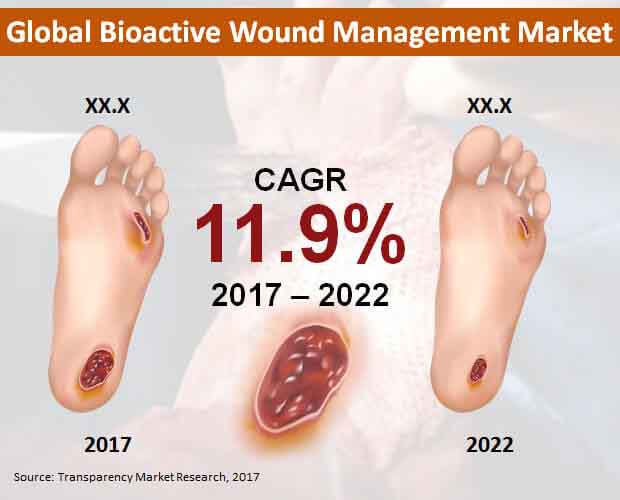
Nonetheless, the increasing adoption of technologically advanced and highly effective wound care products among medical professionals is likely to create the need for efficient management, which will reflect greatly on this market in the years to come. The market’s opportunity is anticipated to rise to US$1.1 bn by 2017 end. Proliferating at a CAGR of 11.90% between 2017 and 2022, it is likely to reach US$2.05 bn by the end of 2022.
Tropical Dressings to Report Higher Demand
The global market for bioactive wound management is primarily studied on the basis of the product, end user, and the application. On the basis of the product, the market is classified into collagen-based dressings, xenografts, bioengineered skin substitutes, allografts, and topical dressings. The demand for tropical dressings is comparatively higher than other products in this market, making the tropical dressing segment the dominant one. Rising at a CAGR of 8.50% between 2017 and 2022, this segment is likely to maintain its dominance over the next few years.
By application, the market is bifurcated into venous leg ulcers, pressure ulcers, diabetic foot ulcers, burn wounds, and surgical wounds. Since burns are the most common physical injuries across the world, the demand for bioactive wound management solutions is greater in burn wounds. Researchers expect this trend to remain so over the forthcoming years. Hospitals, clinics, ambulatory surgical centers (ASCs), and trauma centers have surfaced as the prime end users of bioactive wound management solutions, worldwide.
Request For Custom Research – https://www.transparencymarketresearch.com/sample/sample.php?flag=CR&rep_id=33419
North America to Continue to Dominate
North America, Asia Pacific excluding Japan (APEJ), Europe, the Middle East and Africa (MEA), Latin America, and Japan have emerged as the main regional markets for bioactive wound management. Expanding at a CAGR of 12.80%, the North America market for bioactive wound management is expected to continue to dominate the global market during the period from 2017 to 2022. The presence of a highly advanced and sophisticated healthcare infrastructure is likely to boost this regional market in the near future.
Among other regional markets, APEJ is anticipated to report a promising growth over the coming years on account of the advancement in medical and healthcare infrastructure in various emerging Asian economies. The implementation of favorable reimbursement policies is also projected to reflect positively on this regional market in the years to come.
Acelity L.P. Inc., MiMedx Group Inc., Smith & Nephew Plc., Integra Lifesciences Holdings Corp., 3M Co., Wright Medical Group N.V., Covalon Technologies Ltd., ACell Inc., and Symatese are the main players operating in the global bioactive wound management market.
More Trending Reports by Transparency Market Research – https://www.biospace.com/article/dental-biomaterials-market-increase-in-dental-tourism-in-developing-countries-is-expected-to-boost-the-market/
Global Zygomatic And Pterygoid Implants Market: Acquisitions Undertaken By Savvy Companies To Bolster Positions, Observes Tmr
Global Zygomatic and Pterygoid Implants Market: Snapshot
Dominant players in the global market for zygomatic and pterygoid implants are seen leveraging strategic acquisitions in order to grow their shares. Danaher Corporation, for example, acquired Nobel Biocare, a leader in zygomatic, to steal a march over its competitors. Straumann Holding AG is another key player that made a strategic acquisition of Neodent, a Brazil-based implant company. All such buyouts have helped companies expand their geographical outreach, enhance product portfolio, and tap into a larger customer pool.
Compared to traditional implant methods, zygomatic technique has many advantages. It takes just about a couple of days to fix a row of teeth, while the conventional procedure soaks up over half a year. Further, it does away with bone grafting and brings down discomfort to a great extent by enabling people to dig into crunchy food immediately. On account of the aforementioned benefits, the global zygomatic and pterygoid implants market is seeing steady upswing.
Other things serving to boost growth in the zygomatic and pterygoid implants market are the rising population of elderly, rising instances of dental cavities, and increasing dental injuries due to sports related accidents.
Request Sample Of Report – https://www.transparencymarketresearch.com/sample/sample.php?flag=S&rep_id=33434
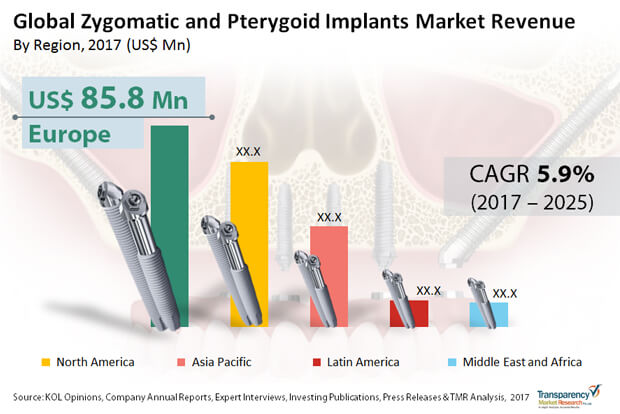
As per Transparency Market Research, the global zygomatic and pterygoid implants market will likely expand at a steady CAGR of 5.9% from 2017 to 2025. Rising at this pace, the market which was worth US$ 211.4 mn in 2016, is predicted to attain a value of US$350.2 mn by the end of 2025.
Multispecialty Hospitals, Equipped with Surgical Instruments, to Rise at Healthy Pace
Application-wise, the global zygomatic and pterygoid implants market can be segmented into severe atrophy of maxillary bone, maxillary sinuses, and others. Among them, severe atrophy of maxillary bone accounted for a dominant share and is predicted to expand at a healthy pace in the upcoming years.
Depending upon end users, the two key segments of the global zygomatic and pterygoid implants market are multispecialty hospitals and dental clinics. While the segment of multispecialty hospitals is expected to expand at a good clip in the years to come on account of having surgical instruments, specialty care, and for the use of general anesthesia in the zygomatic implant procedure, the segment of dental clinics is predicted to have maximum market share as most patients prefer dental clinics, which have advanced technology to treat various dental diseases.
Request For Custom Research – https://www.transparencymarketresearch.com/sample/sample.php?flag=CR&rep_id=33434
Helpful Reimbursement Policies Provide Major Boost to Europe Market
From a geographical standpoint, Europe holds a leading share, which it is slated to retain in the years to come as well, by outshining all other regions vis-à-vis growth rate. The region is predicted to clock a CAGR of 6.2% from 2017 to 2025. Thrust on development of new and advanced dental implants for atrophy of maxillofacial bone by pharmaceutical companies and helpful reimbursement policies have served to place Europe market on the top.
North America trails Europe in terms of market share in the overall zygomatic and pterygoid implants market. Asia Pacific is the most attractive market currently. Demand for latest technologies and a large patient base is spelling opportunities for companies in Asia Pacific. Europe and Asia Pacific are slated to clock CAGRs of 6.0% and 5.8%, respectively, in the forecast period.
Key players in the global market for zygomatic and pterygoid implants are Danaher Corporation, Straumann Holding AG, Noris Medical, S.I.N. Implant System, Silimed, Southern Implants, Implance, Jeil Medical Corporation, and Titaniumfix.
More Trending Reports by Transparency Market Research – https://www.biospace.com/article/animal-genetics-market-increase-in-meat-consumption-and-demand-for-high-quality-proteins-to-drive-growth/
Global Clinical Laboratory Services Market To Clock Cagr Of Over 6.0% During 2017–2025
Global Clinical Laboratory Services Market: Snapshot
The global clinical laboratory services market is set for sound growth in the upcoming years owing to the rising awareness about the importance of early diagnosis of diseases. At present, consumers display a strong demand for advanced technologies that provide quick test results for examination of clinical specimens. This helps physicians to diagnose the condition at an early stage and administer appropriate treatment.
Apart from this, the high prevalence of infectious diseases, incidence of seasonal diseases, and prevalence of lifestyle-related diseases account for the growth of clinical laboratory services market.
However, lack of infrastructure and dearth of expert technicians in developing nations are some factors restraining the market’s growth.
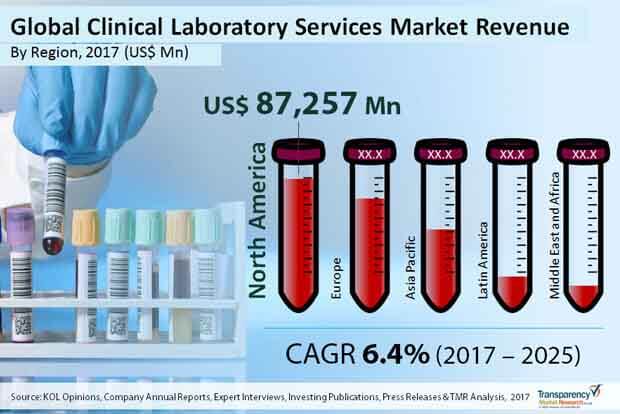
According to a report by Transparency Market Research (TMR), the global clinical laboratory services market was evaluated at US$208.0 bn in 2016. The global clinical laboratory services market is projected to display a healthy more than 6% CAGR over the 2017-2025 forecast period, enabling the market’s growth to a valuation of US$361.3 bn by the end of 2025.
Request Sample Of Report – https://www.transparencymarketresearch.com/sample/sample.php?flag=S&rep_id=414
Clinical Chemistry Test Type to hold Prominence
The report studies the global clinical laboratory services market depending upon a few parameters, viz. test type, service provider, and geography. Based on test type, the global clinical laboratory services market is segmented into clinical chemistry, medical microbiology and cytology, food intolerance test, human and tumor genetics, and other esoteric test. Of them, clinical chemistry test type segment is likely to clock more than 6% over the 2017-2025 forecast period and hold dominance over other segments during this period. The growth of this segment is attributed to the high demand for clinical chemistry examination that forms the basis to diagnose a large range of disease conditions. Clinical advancements in diagnostic techniques such as mass spectrometry and flowcytometry are furthering the growth of clinical chemistry test segment. However, medical biology and cytology segment is likely to expand at a leading CAGR of over 6.5% during the 2017-2025 forecast period.
On the basis of service provider, the global clinical laboratory services market is classified into stand-alone laboratories, hospital based laboratories, contract research organizations (CROs), and others. Amongst all, stand-alone laboratories are likely to hold the leading more than 40% market share over the report’s forecast period. The significant market share of this segment is mainly because of increase in privatization, initiatives taken by market players to set up laboratories, advance healthcare infrastructure in developed nations, and government funding in several countries for modern healthcare.
Request For Custom Research – https://www.transparencymarketresearch.com/sample/sample.php?flag=CR&rep_id=414
Hospital based laboratories segment is expected to display the leading growth rate of CAGR of 6.7% during the forecast period. User convenience is one of the key factors attributed the growth of this segment.
Driven by Economic Development, Asia Pacific to Emerge Lucrative
Geographically, the report studies the global clinical laboratories services market across North America, Asia Pacific, Europe, Latin America, and the Middle East and Africa. North America currently dominates the global clinical laboratory services market vis-à-vis revenue; going forward the region is projected to display a notable 6.0% CAGR over the 2017-2025 forecast period. Huge investments from public and private sector to take the superior healthcare infrastructure a notch higher and prevalence of lifestyle-related diseases are some of the crucial factors that account for the dominant share of North America.
However, Asia Pacific is anticipated to surpass all key regions and display the leading growth rate of over 8.0% during the 2017-2025 forecast period. Population explosion and high incidence of infectious diseases contribute to the growth of this regional market.
Leading companies in the global clinical laboratory services market include Charles River Laboratories International Inc., SYNLAB International GmbH, Sonic Healthcare, NeoGenomics Laboratories Inc., Genomic Health Inc., Fresenius Medical Care, Laboratory Corporation of America Holdings, UNILABS, Quest Diagnostics Incorporated, and Eurofins Scientific among others.
More Trending Reports by Transparency Market Research – https://www.biospace.com/article/botulinum-toxin-market-is-projected-to-reach-us-8-718-7-million-by-2026-tmr/
Tuberculosis Testing Market Continues To Perform Positively, Efforts Taken By Government Pays Off
Global Tuberculosis Testing Market: Snapshot
Savvy players in the global tuberculosis testing market are banking upon strategic acquisitions to grow their shares. They are also pouring money into product development. Such actions of companies are benefitting the market, along with the rising instances of tuberculosis.
Currently, hospital laboratories generate maximum demand in the global tuberculosis testing market. The growth in the hospital laboratories can be attributed to the cost effective tests available in hospital laboratories. The physician’s office laboratories segment is another key end-use segment which is proliferating worldwide because of their cost effectiveness.
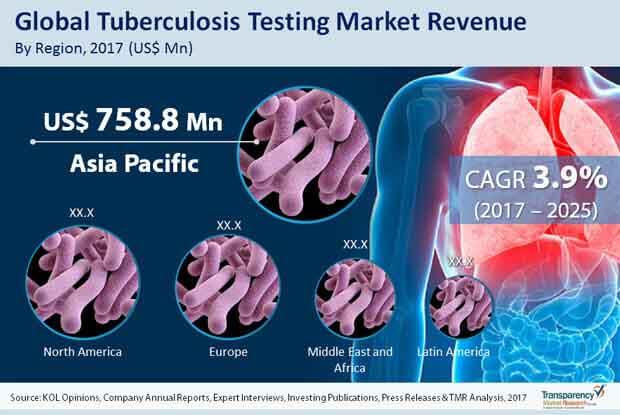
According to a Transparency Market Research report, the global tuberculosis testing market will likely expand at a tepid CAGR of 3.9% from 2017 to 2025 to become worth US$3.18 bn by 2025.
Request Sample Of Report – https://www.transparencymarketresearch.com/sample/sample.php?flag=S&rep_id=2267
Culture-based Tests Most Popular
Depending upon type, the global tuberculosis testing market has been divided into chest x-ray, culture based tests, IGRA (interferon-gamma release assays), mantoux test (TST), nucleic acid testing (NAT), Xpert test, serological tests, smear microscopy and other tests such as ADA, etc. Of them, the culture based tests held a leading share in 2016. In the years ahead too, the segment is expected to retain its dominant share vis-à-vis revenue. This is because it helps to diagnose and confirm active tuberculosis more accurately. Culture test is one of the major confirmatory test for TB diagnosis that utilize sputum or other clinical specimens. A culture test is often carried out to confirm the absence of MTB, boosting the market.
In terms of growth rate, the IGRA (Interferon-Gamma Release Assays) segment is expected to surpass all others in the forecast period. The two commercially available IGRAs, namely QuantiFERON-TB (QFT) and T-SPOT.TB have been CE-marked for use in Europe, increasing its availability and acceptance. This is projected to fuel the IGRA segment during the forecast period.
Request For Custom Research – https://www.transparencymarketresearch.com/sample/sample.php?flag=CR&rep_id=2267
Government Grants Catapults Asia Pacific Market to Leading Position
From a geographical standpoint, Asia Pacific dominates both in terms of revenue generation and growth rate. By clocking a CAGR of 4.9% from 2017 to 2025, the region is expected to grow its revenue to US$1.11 bn. The market in the region has enormously benefitted from the increasing approvals of tuberculosis tests, government grants towards research on tuberculosis such as research and other government initiatives such as tax credit and fee waivers.
Europe trails Asia Pacific in terms of revenue generation because of the rising prevalence of tuberculosis in the region. By rising at a CAGR of 3.5% from 2017 to 2025, the region is predicted to clock in a revenue US$708.3 by 2025. Presence of numerous big names in the region who are constantly developing new products has provided a major boost to the market. The Middle East and Africa is another key region that is expected to grow at a relatively faster pace because of the increasing instances of tuberculosis, the increasing government focus on establishing regulations for the approval of tuberculosis tests, and growing focus on awareness programs by the tuberculosis diagnosis testing kits manufacturing companies, among others. In North America powered by the U.S. is one of the major market for global tuberculosis testing market.
Some of the prominent players in the global tuberculosis testing market are Becton, F. Hoffmann-La Roche Ltd., Thermo Fisher Scientific Inc., Hain Lifescience GmbH, Hologic Inc., Abbott Laboratories, Alere Inc., Epistem plc, Cepheid, bioMérieux SA, Akonni Biosystems Inc., LIONEX Diagnostics & Therapeutics GmbH., Danaher Corporation, Creative Diagnostics, QIAGEN, and Oxford Immunotec Ltd.
More Trending Reports by Transparency Market Research – https://www.biospace.com/article/pharmacy-automation-systems-market-competitive-landscape-and-geographical-outlook/
Subscribe to:
Posts (Atom)